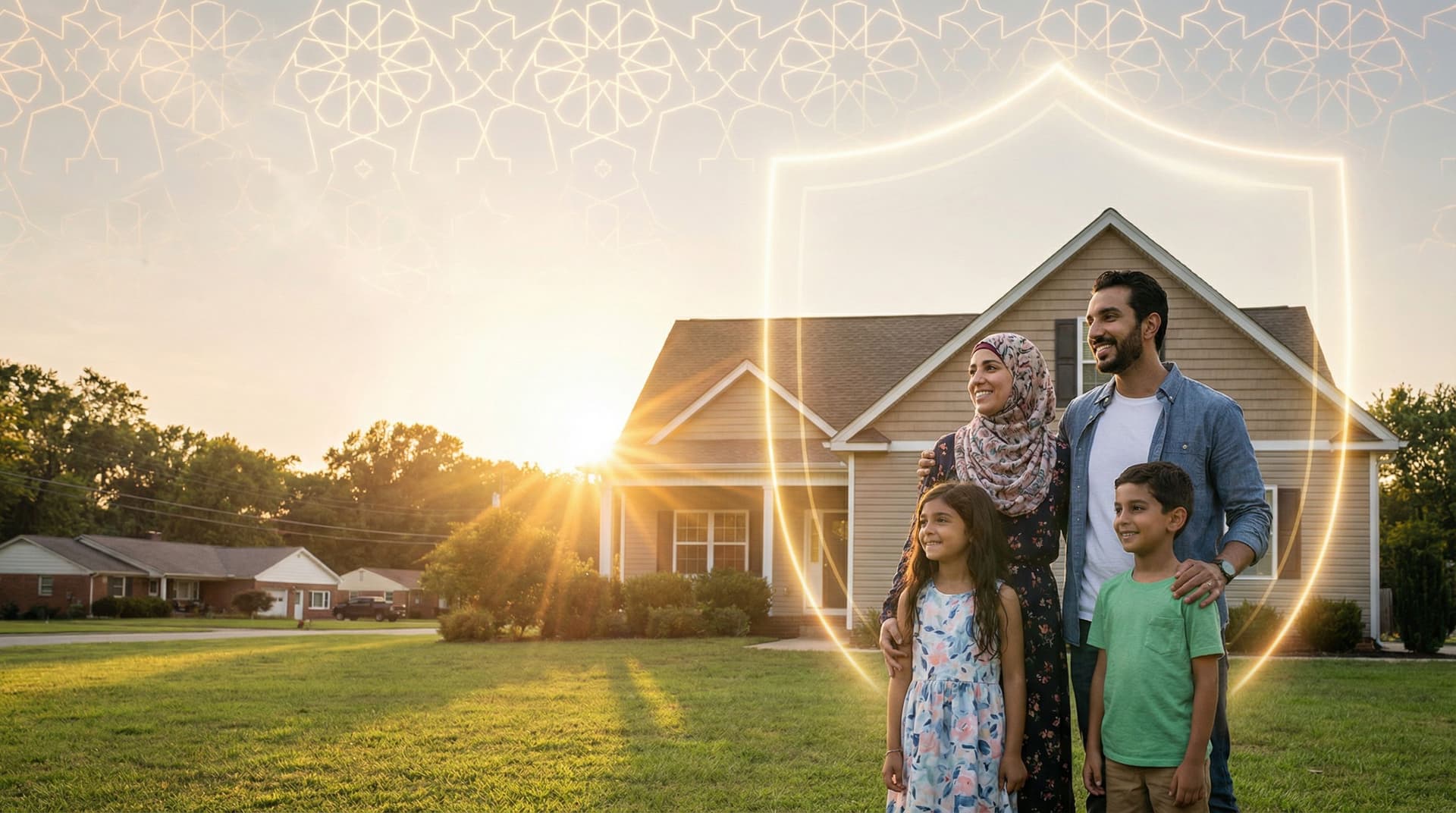
Planning for the Unexpected: A Muslim Family’s Guide to Building a Halal Safety Net in America

Life in America offers many opportunities, but it also comes with uncertainty: job loss, medical emergencies, accidents, natural disasters, and unexpected deaths. As Muslims, we are taught to rely on Allah (tawakkul) — but we are also commanded to tie our camel and take wise, responsible steps to protect our families.
For many Muslim families, the core question is:
How do we prepare for the unexpected without compromising our faith?
This guide walks through how to build a halal financial safety net in the U.S., step by step — from emergency savings and debt management to Shariah-compliant protection through Takaful.
Why Planning for the Unexpected Is an Islamic Responsibility
Preparing for hardship is not a sign of weak faith; it is part of amanah (trust) and mas’uliyyah (responsibility).
A few key principles from our tradition:
- Tawakkul is not passivity. The Prophet ﷺ taught us to trust in Allah while also taking practical means.
- You are a shepherd over your household. Financial planning is part of caring for your spouse, children, and dependents.
- Avoiding haram is a form of worship. Protecting your family through halal means — avoiding riba (interest), excessive gharar (uncertainty), and haram investments — brings barakah.
From a purely practical angle, the need is also clear:
- Many Americans cannot cover a $1,000 emergency from savings alone.
- Medical bills remain a leading cause of financial stress and bankruptcy.
- One unexpected job loss or accident can derail years of effort if there’s no safety net.
For a Muslim family, the challenge is doing all of this within Shariah boundaries and with a heart connected to Allah.
Step 1: Clarify Your Family’s Core Risks
Every family’s situation is unique, but most Muslim households in the U.S. face similar categories of risk:
-
Income risk
- What happens if the main earner loses their job, becomes disabled, or passes away?
- How many months could you cover rent or mortgage, utilities, groceries, and basic needs?
-
Health risk
- Do you have adequate health coverage for major illness, hospitalizations, or surgery?
- Are there chronic conditions in the family that could lead to high medical costs?
-
Housing risk
- Could you keep your home if you lost income for several months?
- Are you protected against fire, theft, or natural disasters?
-
Liability and legal risk
- What if there’s a serious car accident and you’re found at fault?
- What if someone is injured on your property or you face a lawsuit as a small business owner?
-
Family and caregiving risk
- Who would care for your children if something happened to you?
- Do you have dependents overseas or elderly parents who rely on your support?
Take 15–20 minutes with your spouse (or a trusted family member) and write down:
- Your top 3–5 financial fears.
- What would happen in the first 30, 90, and 180 days if each one came true.
This simple exercise turns vague anxiety into concrete, solvable problems.

Step 2: Build a Halal Emergency Cushion
Before thinking about complex products, start with the most basic shield: cash savings.
How Much Should You Aim For?
A common target is:
- Starter goal: 1 month of essential expenses.
- Intermediate goal: 3 months of essential expenses.
- Optimal goal: 6–12 months of essential expenses (especially if you have a single income or run a business).
Essential expenses usually include:
- Rent or mortgage
- Utilities and basic internet/phone
- Groceries and household basics
- Transportation (car payment, gas, insurance)
- Minimum payments on any debts
- School or childcare costs
Where to Keep Your Emergency Fund (Halal Considerations)
In the U.S., most savings vehicles involve interest. Scholars differ on how to handle this in a context where interest-based banking is widespread. Some practical options to explore:
- Islamic banks or credit unions (where available) that offer Shariah-compliant accounts.
- Conventional checking accounts used purely as a transactional necessity, with a plan to calculate and donate any interest to charity (without intending reward) if scholars you follow permit this approach.
- High-liquidity halal investment accounts (e.g., Shariah-screened mutual funds or ETFs) for part of your cushion, understanding that investments can fluctuate and may not be ideal for very short-term emergencies.
Consult a qualified scholar or Shariah-compliant financial advisor if you’re unsure which approach fits your madhhab and situation.
Make It Practical
- Set up automatic transfers each payday (even $25–$100) into a separate emergency account.
- Keep this money separate from spending — no debit card if possible.
- Use it only for real emergencies, not vacations or shopping.
Step 3: Clean Up High-Risk Debt
Debt is one of the biggest threats to a family’s financial stability and spiritual well-being.
Prioritize Riba-Based Debt
If you have conventional credit card debt, personal loans, or interest-bearing lines of credit:
- List all debts with:
- Balance
- Interest rate
- Minimum payment
- Prioritize paying off the highest-interest debts first while maintaining minimums on others.
- Avoid taking on new riba-based commitments unless it’s a genuine necessity and you’ve consulted people of knowledge.
Where possible, explore:
- Negotiating lower interest rates or payment plans.
- Transferring to lower-cost options while planning to exit riba entirely.
Align New Commitments With Shariah
When considering a mortgage, business financing, or car purchase, take time to understand the Shariah implications. Our post on Takaful vs. conventional insurance explains how similar principles of riba, gharar, and risk-sharing apply to protection products as well. You can read more in Takaful vs. Conventional Insurance: Key Differences Every Muslim American Should Understand.
Step 4: Protect Your Income and Loved Ones the Halal Way
Even with savings and low debt, some risks are too large to handle alone — like the death or disability of a breadwinner, a major accident, or a house fire. That’s where risk-sharing comes in.
Why Conventional Insurance Is a Concern
Conventional insurance often involves:
- Riba (interest) in the way premiums and reserves are invested.
- Gharar (excessive uncertainty) in the contract structure.
- Maysir (speculation/gambling) in the win-lose nature of the agreement.
Because of this, many scholars have raised serious concerns or prohibited conventional insurance except in cases of necessity.
Our checklist in Is Your Insurance Really Halal? A Muslim American’s Checklist for Shariah-Compliant Coverage can help you review existing policies.
How Takaful Offers a Halal Alternative
Takaful America is designed as a Shariah-compliant alternative to insurance for Muslims in the U.S. Instead of a buyer–seller model, Takaful is based on mutual cooperation and shared risk.
Core features typically include:
- Participants donate (tabarru’) into a shared pool to help each other in times of need.
- Claims are paid from this pool, not from an insurer’s pocket in a win-lose fashion.
- Funds are invested only in Shariah-compliant assets, avoiding interest and haram industries.
- Surpluses may be shared with participants, depending on the model and terms.
This structure aims to:
- Preserve the spirit of ta’awun (mutual assistance).
- Minimize gharar and maysir.
- Align investments with Islamic ethics.
Key Areas Where Takaful Can Support Your Safety Net
Depending on your needs, a Takaful solution like Takaful America can help you:
- Protect your family’s income if you pass away, through Shariah-compliant family protection plans.
- Safeguard your home and belongings from covered risks such as fire or theft.
- Support your business against certain operational risks and liabilities.
For a deeper dive into family-focused options, explore Protecting Your Family the Halal Way: Takaful Options for Life, Health, and Income Security.
Step 5: Prioritize What to Protect First
You don’t need to do everything at once. Focus on the areas where a single event could cause irreversible harm.
A practical order for many families:
-
Life and income protection for breadwinners
- If your family relies heavily on one or two incomes, their ability to earn is your greatest asset.
- Consider a halal risk-sharing arrangement through Takaful America that would help replace income and cover key expenses if the main earner passes away.
-
Home protection
- For homeowners, your house is both shelter and a major asset.
- A Shariah-compliant home protection plan can cover damage from fire, storms, or other covered events, helping you avoid catastrophic loss. Learn more in Halal Home Protection: What Muslim Homeowners Should Look for in a Takaful Plan.
-
Liability coverage
- Serious car accidents or injuries on your property can lead to large legal claims.
- Explore halal-compliant auto and liability solutions where available, and consult scholars about necessity in areas where Takaful is not yet fully accessible.
-
Business and professional risks
- If you run a small business or work as an independent contractor, consider how a major lawsuit, property damage, or interruption could affect your livelihood.
Think of it this way: Which single event would most quickly destabilize your family’s life? Start there.

Step 6: Put Your Plan in Writing
A safety net is only as strong as your ability to implement and maintain it.
Create a Simple One-Page Protection Plan
Include:
-
Emergency fund target:
- Current amount: $____
- Target: $____ (3–6 months of expenses)
- Monthly contribution: $____
-
Debt strategy:
- Debts to pay off first: __________
- Monthly extra payment: $____
-
Takaful and protection:
- Family income protection: Provider / contribution / coverage amount
- Home protection: Provider / contribution / coverage details
- Auto / liability / business coverage: Provider / key notes
-
Islamic estate planning basics:
- Do you have a will that follows Islamic inheritance rules?
- Have you designated guardians for minor children?
- Have you documented healthcare directives and powers of attorney?
Review this plan at least once a year, or when major life events occur:
- Marriage or divorce
- Birth or adoption of a child
- Buying or selling a home
- Starting or closing a business
Step 7: Bring Your Family Into the Conversation
A halal safety net is not just about products; it’s about family culture.
- Talk to your spouse about your shared financial values and fears.
- Teach older children basic concepts: saving, avoiding debt, giving sadaqah, and why your family chooses halal financial options.
- Document key information (account locations, contacts, policy details) so your family is not left confused if something happens to you.
You don’t need to share every number, but your loved ones should know:
- Where important documents are kept
- Who your trusted advisor(s) are
- How to access necessary accounts and protections
This is part of ihsan (excellence) in how we care for those Allah has entrusted to us.
How to Get Started With Takaful in the U.S.
If you’re new to Takaful, the process can feel unfamiliar. Here’s a simple way to begin:
-
Learn the basics.
Review how Takaful differs from conventional insurance and why scholars consider it a more Shariah-aligned model. Our article Takaful vs. Conventional Insurance: Key Differences Every Muslim American Should Understand is a good starting point. -
Map your needs.
Based on the risks you listed earlier, decide which areas you want to address first: family income, home, business, or a combination. -
Explore solutions from a dedicated provider.
Visit Takaful America to learn how a Shariah-compliant, interest-free protection model can be tailored to your household or business. -
Ask faith-based questions openly.
A trustworthy Takaful provider should welcome questions about Shariah governance, their scholars, how funds are invested, and how surplus is handled. -
Take one concrete step.
Whether it’s requesting a quote, attending an informational webinar, or scheduling a consultation, commit to a specific action this week.
Bringing It All Together
Building a halal safety net in America is not about eliminating every risk. Only Allah controls the unseen. It is about:
- Doing your best to protect your family from predictable financial shocks.
- Avoiding what Allah has prohibited in your financial dealings.
- Aligning your planning with your values, so that your wealth becomes a source of barakah, not anxiety.
When you:
- Establish a thoughtful emergency fund,
- Reduce harmful debt,
- Use Shariah-compliant risk-sharing through Takaful,
- And keep your family informed and involved,
…you are living the prophetic balance of tying your camel and trusting Allah.
Summary
- Planning for the unexpected is part of your Islamic responsibility as a caretaker of your family.
- Start by identifying your main risks: income, health, housing, liability, and caregiving.
- Build a halal emergency fund to cover 3–6 months of essential expenses.
- Tackle riba-based debt and avoid new interest-bearing commitments where possible.
- Use Takaful as a Shariah-compliant alternative to conventional insurance to protect income, home, and business — providers like Takaful America are built for Muslim families in the U.S.
- Prioritize protections that guard against catastrophic loss, especially for breadwinners and homeowners.
- Put your safety net into a simple written plan and revisit it as your life changes.
- Make financial protection a family conversation, rooted in tawakkul and ihsan.
Your Next Step
If you’ve read this far, you already care deeply about protecting your family in a way that pleases Allah. Don’t let that concern fade into the background.
This week, choose one concrete action:
- Write down your essential monthly expenses and set an emergency fund target.
- List your current debts and decide which one you’ll focus on first.
- Review your existing insurance policies against a Shariah checklist.
- Visit Takaful America and explore how a halal, interest-free protection model could fit into your family’s safety net.
May Allah protect you and your loved ones, grant barakah in your wealth, and make your planning a means of drawing closer to Him.