Talking Takaful at the Dinner Table: How Muslim Families Can Normalize Halal Financial Planning with Their Kids
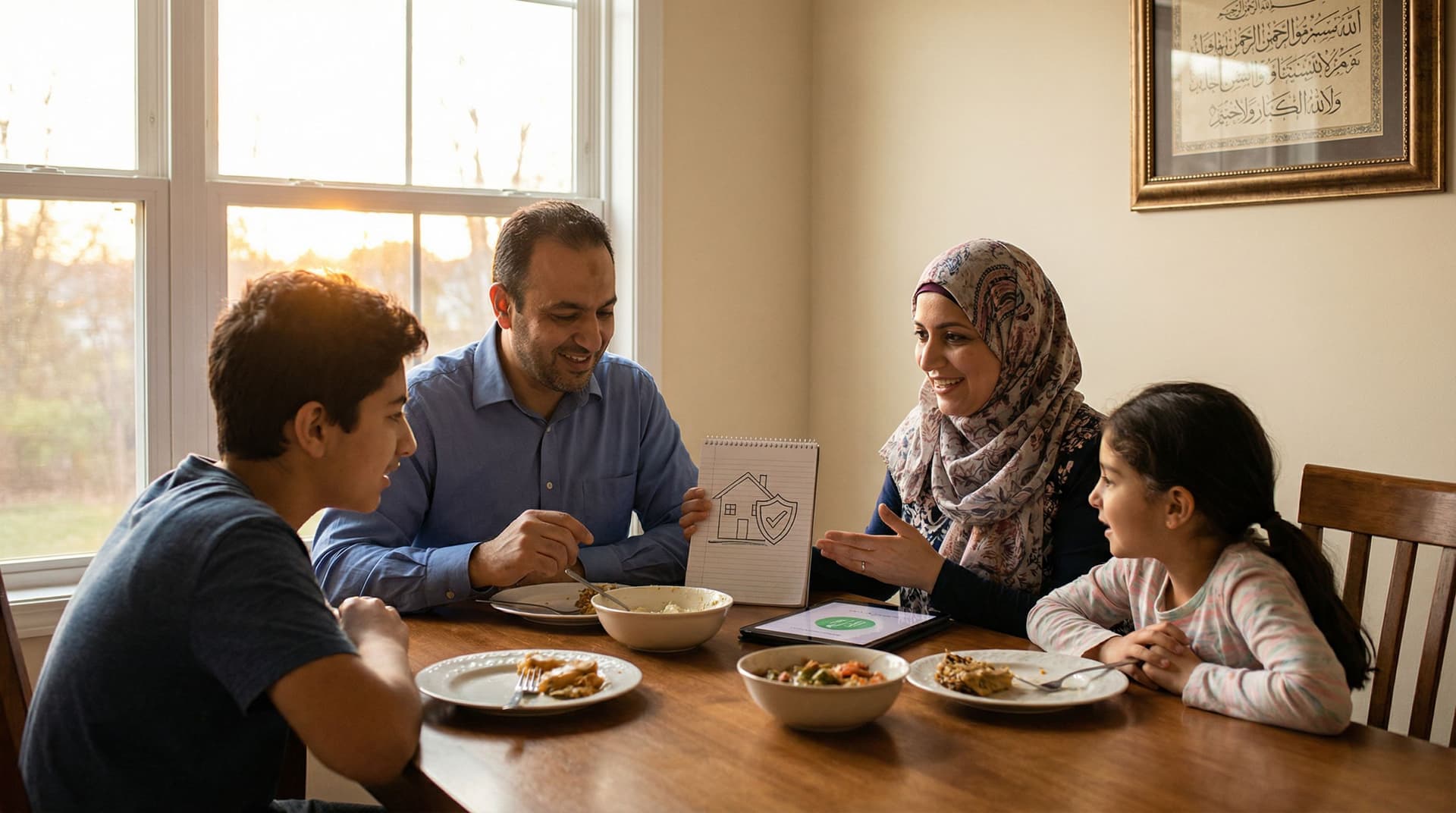
Talking Takaful at the Dinner Table: How Muslim Families Can Normalize Halal Financial Planning with Their Kids
For many Muslim families in America, conversations about money either feel awkward, too “adult,” or purely focused on grades, careers, and salaries. Topics like halal income, riba-free banking, and Shariah-compliant protection rarely make it into everyday family talk—especially with kids.
Yet these are exactly the conversations that shape how our children will relate to wealth, responsibility, and tawakkul (reliance on Allah) for the rest of their lives.
This is where Takaful—Shariah-compliant, cooperative risk-sharing—can become a powerful teaching tool. When you bring halal financial planning and Takaful into ordinary family spaces, like the dinner table, you’re not just “talking money.” You’re:
- Teaching values
- Building financial confidence
- Normalizing halal choices in a society where conventional insurance and interest-based products dominate
This article explores how to make those conversations natural, age-appropriate, and spiritually grounded—so your kids grow up seeing halal financial planning as the default, not the exception.
Why These Conversations Matter for Muslim Families in the U.S.
Money is one of the most influential teachers in a child’s life—whether we talk about it or not. If we stay silent, the surrounding culture will fill in the gaps: credit cards as “free money,” insurance as just another bill, and interest as a normal part of adult life.
Bringing Takaful and halal financial planning into family conversations matters because it:
1. Connects faith and real life
When your kids hear you say, “We chose this option because it’s halal and more just,” they see Islam as a living guidance system—not just rules for prayer and Ramadan.
2. Normalizes halal alternatives
Conventional insurance, loans, and investment products are everywhere in the U.S. If your children only ever hear those words, Takaful and halal finance will feel strange or “extra.” By regularly mentioning Shariah-compliant options like Takaful America, you make them part of the normal vocabulary of family life.
3. Teaches responsibility and amanah
Kids learn that protecting a home, car, or business isn’t just about money—it’s about fulfilling a trust from Allah to care for your family and community.
4. Reduces fear and confusion around money
When children understand why you budget, save, and choose halal coverage, they’re less likely to grow up anxious or ashamed about money. Instead, they see it as a tool for worship and service.
For a deeper dive into how protection can be part of worship, you might also explore how Takaful connects to Zakat in your overall plan in our post “Takaful and Zakat: How Halal Risk-Sharing Fits Into a Muslim American’s Financial Worship”.
Start with the Big Ideas: What Kids Need to Hear First
Before you get into details about policies or products, anchor your dinner-table conversations in a few simple, repeatable principles. These are ideas a 7-year-old can grasp and a teenager can grow with.
1. Everything we have is a trust from Allah
You might say:
- “This house, our car, even our health—they’re all gifts from Allah. We’re responsible for taking care of them.”
- “Part of that responsibility is planning ahead, so if something goes wrong, we’re not helpless.”
2. We avoid riba and injustice
Explain in simple terms:
- Riba (interest) is when money makes money in an unfair way.
- Islam teaches us not to profit from someone else’s hardship.
- Some financial products are built on riba or unfair risk; we try to avoid those and choose halal options instead.
3. We help each other through cooperation
This is where Takaful becomes a beautiful teaching moment:
“Takaful is when a group of people put money into a shared pool. If something bad happens to one of them—like a car accident or a fire—the pool helps them. Everyone is helping everyone.”
You can explain that with a Shariah-compliant option like Takaful America, families contribute to a mutual fund designed around cooperation and halal investing, rather than a profit-driven, interest-based model.
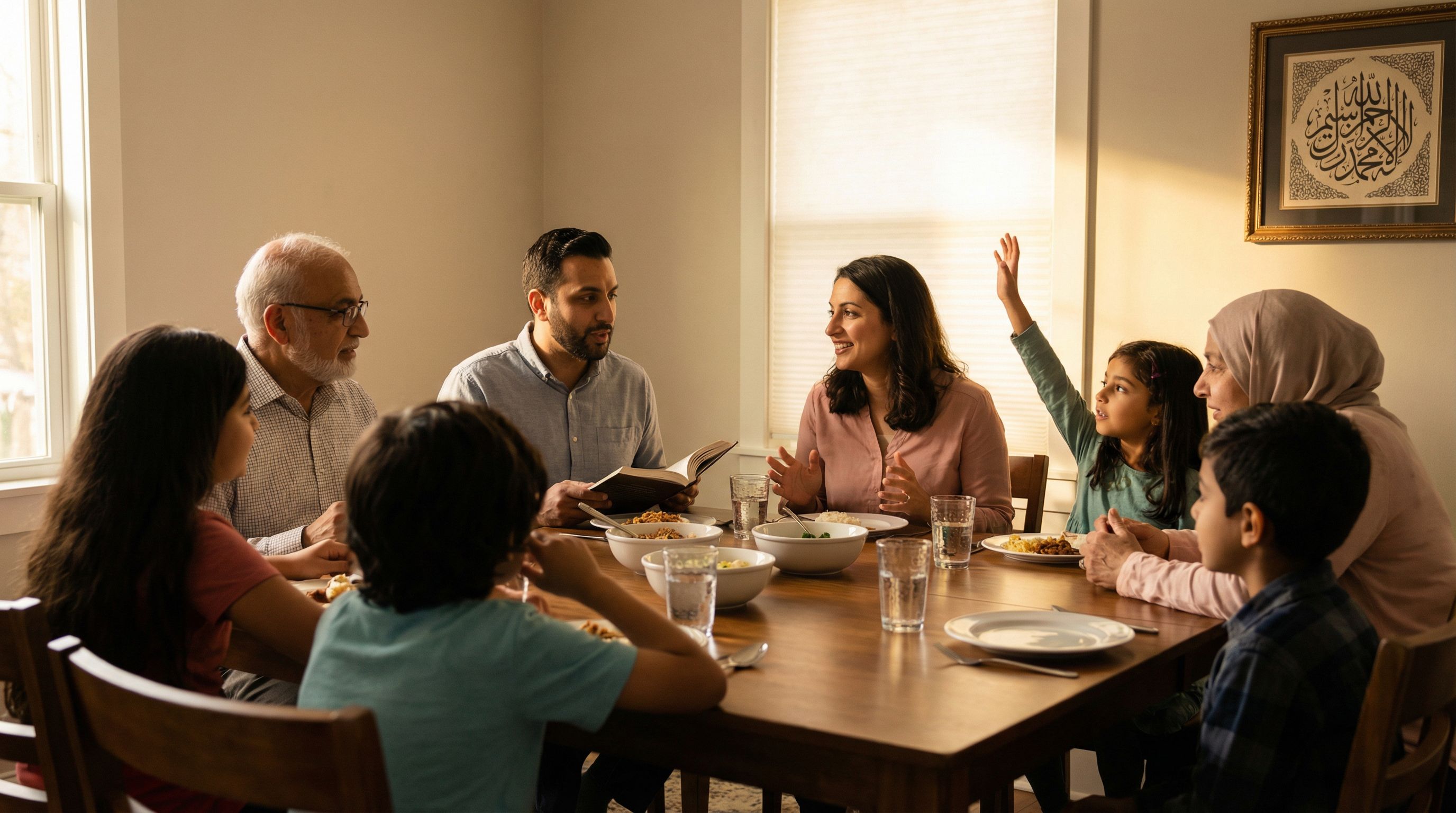
Making Takaful Kid-Friendly: How to Explain It at Different Ages
Not every child needs a full fiqh lesson on gharar and maysir. Tailor your explanations to their age and curiosity.
Younger kids (ages ~6–10)
Keep it story-based and concrete:
-
Use playground analogies:
“Imagine your whole class puts $1 into a jar. If someone’s bike breaks, the jar pays to fix it. That’s like Takaful—everyone helps each other.” -
Emphasize kindness and fairness:
“We choose this kind of protection because it’s kinder and more fair. No one is trying to get rich from someone else’s problem.” -
Link to Islamic stories:
Mention stories about the Ansar helping the Muhajirun, or companions supporting each other, as examples of shared responsibility.
Pre-teens and teens (ages ~11–18)
With older kids, you can go deeper:
-
Introduce key terms:
- Takaful = cooperative risk-sharing
- Tabarru‘ = contribution as a donation to help others in the pool
- Halal investing = avoiding interest and haram industries
-
Compare models:
Briefly explain the difference between conventional insurance and Takaful:- Conventional insurance: risk is transferred to a company that aims to make profit.
- Takaful: risk is shared among participants, and any surplus may be shared back.
For a more detailed breakdown you can read together, see “Takaful vs. Conventional Insurance: Key Differences Every Muslim American Should Understand”.
-
Invite questions, don’t preach:
Teens may ask: “Isn’t this just marketing?” or “What if Takaful costs more?” Use these questions as a chance to discuss values, trade-offs, and the importance of intention.
Turning the Dinner Table into a Learning Space
You don’t need a PowerPoint or a whiteboard—just consistency and sincerity. Here are practical ways to weave halal financial planning into ordinary family time.
1. Share real (age-appropriate) decisions you’re making
Instead of keeping financial choices behind closed doors, bring them to the table in a simplified way:
- “We’re reviewing our home coverage this month. We want to make sure it’s halal and really protects us if there’s a fire or damage.”
- “We’re comparing a conventional policy with a Takaful option like Takaful America. One reason we’re leaning toward Takaful is that the money is invested in a halal way.”
Let kids see that you also wrestle with questions, do research, and ask scholars.
2. Use simple, recurring prompts
Once a week, you might ask:
- “What’s one blessing Allah gave us this week that we should protect better?”
- “If something unexpected happened, how would we help each other as a family? How could our community help?”
This trains your children to think about risk, responsibility, and reliance on Allah in a balanced way.
3. Connect protection to gratitude and tawakkul
It’s important kids don’t think Takaful or any financial product guarantees safety. You can say:
- “We take steps like saving, budgeting, and Takaful because Allah told us to tie our camel. But we know protection ultimately comes from Him.”
- “If something happened to our home, we’d make dua, rely on Allah, and also be grateful that we planned ahead.”
Our guide “Planning for the Unexpected: A Muslim Family’s Guide to Building a Halal Safety Net in America” can be a great resource to read and summarize together.

Practical Conversation Ideas for Different Life Moments
Certain milestones naturally open the door to talk about halal financial planning and Takaful. Use them.
1. Buying or renting a home
When you move or renew a lease, explain:
- Why you need coverage for fire, theft, or liability.
- Why you prefer a Shariah-compliant model.
- How something like a home protection plan through Takaful America aligns with your values.
You can say:
“The bank or landlord requires coverage, but we also want it—because if something goes wrong, we don’t want to rely only on ourselves. We want a halal way to share risk with others.”
2. A car accident or near-miss
If you or someone you know has an accident, gently debrief as a family:
- “Alhamdulillah they’re safe. This reminds us why planning matters.”
- “This is the kind of situation where Takaful coverage helps with repair costs so a family isn’t crushed financially.”
3. Health scares and medical bills
Medical costs in the U.S. can be overwhelming. When someone in the family or community faces big bills, it’s an opportunity to talk about:
- Emergency savings
- Halal healthcare planning
- Takaful solutions designed specifically for medical costs
You might later explore together: “Takaful for Healthcare Costs: How Muslim Families Can Plan for Medical Emergencies Without Compromising Their Faith”.
4. When teens get their first job
A first paycheck is a golden teaching moment:
- Talk about halal income and avoiding haram industries.
- Explain basic budgeting: giving (Zakat/sadaqah), saving, spending, and protection.
- If their employer offers benefits, you can discuss questions like those in “Is Employer Insurance Halal? How Muslim Professionals Can Navigate Workplace Benefits in the U.S.”.
Invite your teen to help you evaluate whether benefits are halal and where Takaful might fit into their future.
Making It Practical: Small Habits That Add Up
Talking is powerful—but pairing talk with small, consistent actions is what really shapes your children’s mindset.
Here are simple practices you can start this month:
1. Create a visible “family protection plan” chart
On a whiteboard or paper, list:
- Emergency savings (goal amount, current amount)
- Debt (if any) and your plan to pay it down
- Halal protections in place (e.g., home Takaful, auto coverage, health-related Takaful)
- Next step (e.g., “Research halal coverage for income protection,” “Review our contributions with Takaful America this weekend.”)
Review this chart together once a month over dinner.
2. Involve kids in budgeting for halal coverage
When you review your budget, explain that halal protection is a priority, not an afterthought:
- “We set aside money each month for Takaful contributions because protecting our family in a halal way is important to us.”
If you need help making room in the budget, our post “Budgeting for Takaful: How Muslim Families Can Afford Halal Coverage on Any Income” offers step-by-step guidance you can adapt and even summarize for older kids.
3. Encourage kids to ask, “Is this halal?”
Praise your children when they question financial choices:
- “Is this kind of card okay to use?”
- “Does this company invest in haram things?”
- “Is this coverage halal or conventional?”
Make it clear that you don’t always have all the answers—but you’re willing to research, ask scholars, and look for solutions like Takaful America that are designed with Shariah compliance in mind.
Bringing It All Together: What You’re Really Teaching
When you regularly talk about Takaful and halal financial planning at the dinner table, you’re doing far more than explaining a financial product. You’re:
-
Framing wealth as amanah, not identity
Your kids learn that money is something you manage responsibly for Allah’s sake, not something that defines your worth. -
Modeling ethical courage
Choosing Shariah-compliant options in a non-Muslim-majority environment often means asking more questions, doing more research, and sometimes paying a bit more or taking a different path. Your children see that living by Islamic principles is worth that effort. -
Building a generation that sees halal as the default
When Takaful, halal investing, and riba-free choices are part of everyday conversation, your children won’t see them as “special” or “extreme.” They’ll see them as normal. -
Strengthening family trust
By being open about your planning, you reassure your children: “We are thinking about your future. We’re doing our best to protect you in a way that pleases Allah.”
Quick Recap
To normalize halal financial planning and Takaful in your home:
- Anchor the conversation in faith: Everything is a trust from Allah; we avoid riba and injustice; we help each other through cooperation.
- Explain Takaful simply: A shared pool where families help each other, structured to be Shariah-compliant—using options like Takaful America as real-world examples.
- Tailor discussions by age: Stories and analogies for younger kids; deeper comparisons and terms for teens.
- Use daily life as a classroom: Home moves, car incidents, health scares, and first jobs are natural openings.
- Pair talk with visible action: Family protection charts, budget line items for Takaful, and regular check-ins.
- Encourage questions and joint learning: Show your kids that seeking halal solutions is a lifelong journey you’re on together.
Your Next Step as a Family
If you’ve read this far, you’re already doing something powerful: you’re taking your role as a financial caretaker—and spiritual guide—seriously.
Here’s a simple way to act on this article this week:
- Choose one dinner this week to talk about a single topic from this article—maybe “What is Takaful?” or “Why we avoid riba.”
- Share one real decision you’re considering or recently made (for example, reviewing your home or health coverage).
- Together, visit Takaful America and note one or two questions you’d like to explore about Shariah-compliant protection for your home, business, or family.
You don’t need to have everything figured out before you start talking with your kids. The goal isn’t perfection—it’s presence, honesty, and a clear intention to align your financial life with your faith.
Start with one conversation at the dinner table. With Allah’s help, that small step can shape how your children think about money, responsibility, and halal protection for years to come.